


 Language: English











Solutions
Horse Construction offers full range of structural strengthening materials with technical supports, documentation supports, products supports, project supports.
Which Carbon Fibers Are Suitable for Building Structural Strengthening?

In recent years, carbon fiber reinforced polymer (CFRP) has become one of the most widely used high-performance materials in structural strengthening, including building repair, bridge rehabilitation, seismic retrofitting, and structural capacity improvement. However, the market is filled with various types of carbon fiber products, and many engineers, contractors, and project managers lack clear guidance on which carbon fiber can be safely used for structural strengthening.
As a professional manufacturer of structural strengthening materials compliant with international codes, we provide this in-depth technical guide to help you distinguish applicable carbon fiber materials and avoid potential structural risks caused by improper material selection.
Not All Carbon Fiber Is Designed for Structural Use
Carbon fiber products can be divided into industrial-grade, decorative-grade, and structural-grade.
Structural strengthening is a load-bearing engineering application that involves long-term force, fatigue resistance, durability, and structural safety. Therefore, only code-compliant, continuous, high-performance carbon fiber systems can be used.
Low-grade carbon fiber, decorative carbon fiber, large-tow industrial carbon fiber, and non-structural carbon fiber products cannot satisfy structural performance requirements and shall be strictly prohibited in structural strengthening projects.
Qualified Carbon Fiber for Structural Strengthening
(1) Raw Material Standard: PAN‑based Continuous Carbon Fiber
According to international design codes including ACI 440 (USA), fib TG9.3 (Europe), ISO 10406, and major national structural strengthening standards:
Only polyacrylonitrile (PAN)‑based continuous carbon fiber is recognized for structural strengthening.
Pitch‑based carbon fiber, regenerated carbon fiber, and recycled carbon fiber do not meet the requirements for modulus, stability, and bond performance.
(2) Tow Size Standard: > 24K Is Not Allowed
This is a critical indicator often misunderstood in the industry.
12K and 24K carbon fiber are internationally accepted for structural strengthening.
They feature uniform fiber arrangement, stable mechanical properties, good impregnation with resin, reliable bonding, and consistent force transfer.
Carbon fiber above 24K (such as 48K, 50K, 60K) is not suitable for structural strengthening.
Reasons include:
• Poor uniformity and uneven stress distribution
• Low effective utilization rate of tensile strength
• Difficult to fully impregnate, leading to weak internal bonding
• Does not meet the stability requirements of structural codes
• May cause premature failure under dynamic load or long-term stress
(3) Product Form: Unidirectional Structural CFRP Is Applicable
For structural strengthening, the following forms are recognized globally:
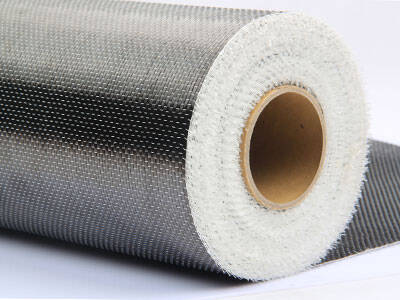
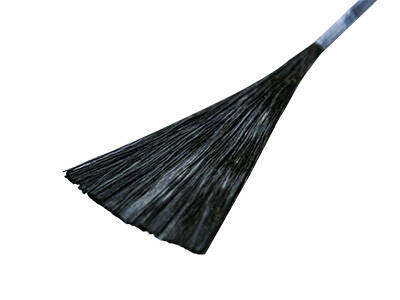
• Unidirectional Carbon Fiber Fabric (CFRP Fabric)
The most commonly used material for flexural strengthening, shear strengthening, and seismic confinement of beams, slabs, columns, and walls.
All fibers are arranged in a single direction to provide maximum tensile strength.
Typical specifications: 200g/m², 230g/m², 300g/m², 600g/m².
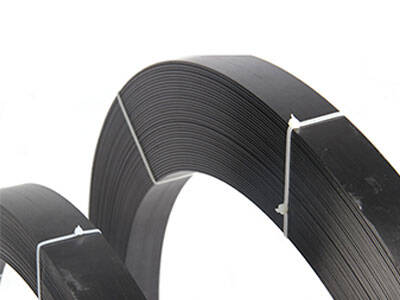
Used in bridge reinforcement, high-load structural members, and projects requiring high modulus and high durability.
Typical specifications: 1.2mm, 1.4mm.
• Near‑Surface Mounted (NSM) CFRP Strips
Embedded into concrete grooves for better protection and higher strengthening efficiency.
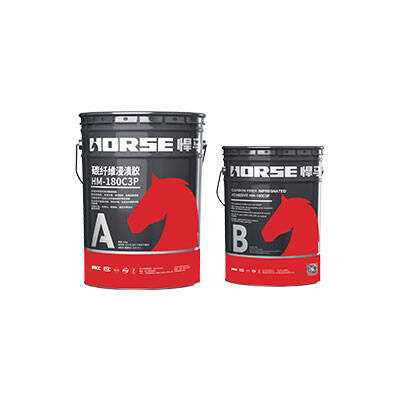
(4) Matching Material: Special Structural Epoxy Resin System
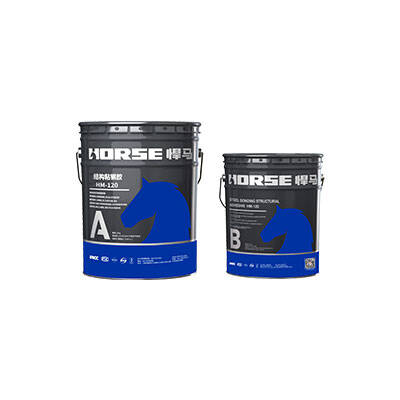
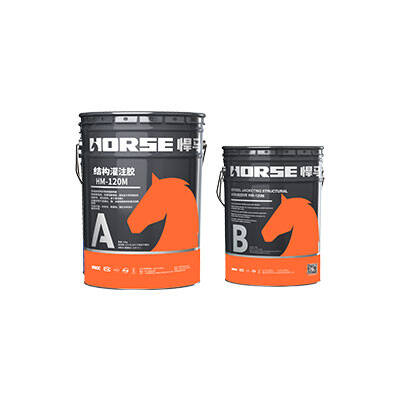
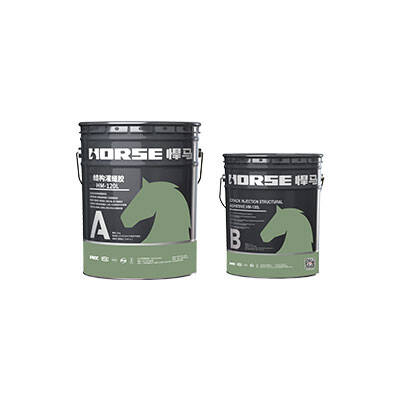
Carbon fiber alone cannot strengthen structures. It must form a complete CFRP system with code-compliant structural epoxy resin.
The resin system must meet:
• High bond strength to concrete and steel
• Good wet-heat aging resistance
• Low viscosity for full impregnation
• Compatible with carbon fiber
• Qualified test reports in accordance with ACI 440 or EN standards

Carbon Fiber Products Prohibited for Structural Strengthening
To ensure structural safety, the following materials must be excluded:
Carbon fiber with tow size over 24K
Unstable, non-code-compliant, high risk of failure.
Chopped carbon fiber, carbon powder, carbon felt
Discontinuous fibers cannot form continuous tensile strength.
Decorative carbon fiber cloth (3K twill, glossy, colored, patterned)
Low strength, no structural certification, for appearance only.
Pitch-based or recycled carbon fiber
Does not meet structural performance requirements.
Products without official test reports, factory certificates, or code-compliant data
Any strengthening material without complete data is considered unqualified.
Key Mechanical Performance of Qualified Structural CFRP Faric
To meet international standards, CFRP materials should generally achieve:
Tensile strength: ≥ 3400 MPa
Modulus of elasticity: ≥ 230 GPa
Elongation at break: ≥ 1.6%
Effective bond strength: ≥ 2.5 MPa (to concrete)
These values ensure the material can work together with the structure under load without premature damage.
Message from the Manufacturer
Structural strengthening is about safety, not just material application.
As a professional manufacturer focusing on structural strengthening materials, we produce 12K and 24K PAN‑based unidirectional CFRP systems fully compliant with ACI 440, fib, and ISO international standards.
We do not supply non-structural, decorative, or low-grade carbon fiber products. Our mission is to provide reliable, code-compliant, and high-safety materials for global construction projects.
If you need support in material selection, design suggestions, or construction guidance, please feel free to contact our professional technical team.
Choose safe CFRP. Build safe structures.
You can find anything here you are in need of, have a trust trying on these products, you will find the big difference after that.

High strength, unidirectional carbon fiber wrap pre-saturated to form a carbon fiber reinforced polymer (CFRP) wrap used to strengthen structural concrete elements.

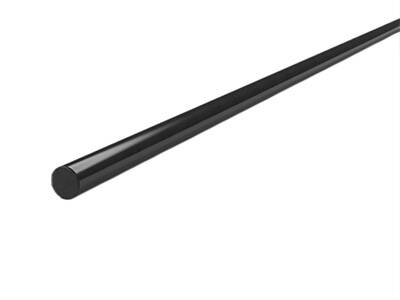
High strength carbon fiber reinforced polymer (CFRP) strip / laminate / plate for structural strengthening and concrete repair

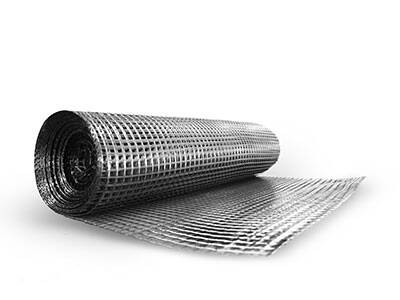
High strength, unidirectional carbon fiber fabric pre-saturated to form a carbon fiber reinforced polymer (CFRP) fabric used to strengthen structural concrete elements.
